Industries operating in remote or hazardous conditions face a common and pressing challenge: delivering reliable electrical infrastructure quickly, safely, and cost-effectively. From scorching desert oilfields to storm-battered offshore platforms, the need for robust power distribution has never been more critical. Traditional brick-and-mortar construction is simply not built for these realities. It is slow, expensive, and often impossible to execute in locations where terrain, climate, and logistics present significant barriers. The prefabricated electrical building, also known as an electrical equipment house or E-House, is a purpose-built solution that is transforming how industries power their most demanding operations. This article explores the benefits of prefabricated electrical buildings, key design considerations, and their applications across power-dependent industries.
What Is a Prefabricated Electrical Building?
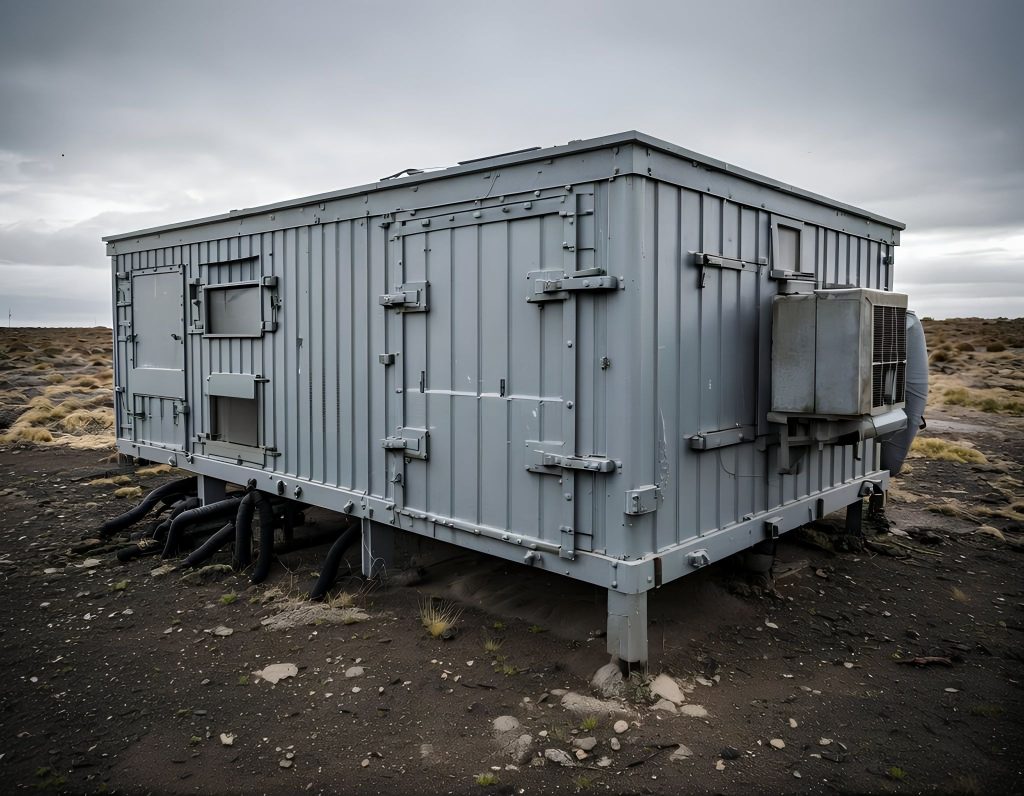
A prefabricated electrical building, also known as an E-House or Power Distribution Center, is a factory-built enclosure that integrates electrical distribution and control equipment, such as switchgear, VFDs, MCCs, UPS systems, transformers, HVAC, protection systems, and automation controls. These buildings are designed, assembled, tested, and delivered to industrial sites to reduce field labor, protect critical equipment, and accelerate commissioning in harsh or remote environments.
Conventional construction happens at the final destination. In contrast, fabrication and assembly of these electrical houses are off-site in a controlled factory environment, before thorough testing and transportation to their final location. Industry leaders confirm these structures support complex voltage ranges and configurations. They are suitable for the most demanding industrial applications globally.
Key Benefits of Prefabricated Electrical Buildings
Faster Deployment
One of the most significant advantages of prefabricated buildings is speed. Traditional construction can take many months to complete on-site. Whereas prefabricated buildings can be ready for deployment in a fraction of that time. Fabrication happens simultaneously with site preparation. This parallel workflow dramatically shortens project timelines. Hence, your operations can be up and running sooner, reducing costly delays.
Cost Efficiency
Prefabricated electrical buildings consistently deliver cost savings over traditional construction because it shifts hundreds of labor hours to a controlled factory setting, which is highly efficient. In addition, it eliminates unpredictable weather delays and reduces safety liabilities. This approach significantly lowers overall capital expenditures for your business. Reduced site coordination requirements also lower project management costs. This minimizes the risk of expensive rework on your site.
Superior Protection in Harsh Environments
Prefabricated electrical buildings are engineered to operate where conventional structures cannot. Their design enables them to withstand high winds, heavy snow loads, seismic activity, and extreme temperatures, hence making them a dependable choice for sites that experience harsh or unpredictable environmental conditions.
Where the operating environment demands it, these structures can be fitted with blast-resistant panels, climate control systems, and corrosion-resistant coatings to extend service life and protect sensitive equipment inside. In hazardous industrial zones, they can also be configured to meet strict area classification requirements, preventing internal electrical activity from becoming an ignition source in volatile atmospheres.
The result is a sealed, insulated, and shielded environment that keeps critical power infrastructure operational regardless of what the surrounding environment demands.
Quality Assurance and Consistency
Factory fabrication means every unit undergoes strict quality control checks before leaving. In addition, equipment is installed, tested, and completely ready to use upon delivery. This eliminates the inconsistencies of different crews working under varying conditions, which is critical in heavy industries. Equipment failure can result in significant financial losses or safety incidents. Strict factory testing prevents regulatory violations and ensures reliable operation.
Scalability and Portability
Prefabricated electrical houses are inherently modular by design. As your operational needs grow, you can deploy and integrate additional units seamlessly. Many industries operate in temporary or constantly evolving locations. The ability to relocate an entire electrical substation is a massive advantage. Key modular benefits include rapid deployment, cost efficiency, and total portability.
Key Design Considerations Prefabricated Electrical Buildings
Not all prefabricated buildings are created equal. Selecting the right electrical house requires careful attention to specific design factors.
Structural Ratings and Wind Resistance
The structural framework must handle the specific environmental loads of the deployment site. This includes wind load ratings appropriate for the region. The design must ensure full seismic zone compliance. Engineers must also account for snow loads and roof weight specifications. Blast resistance is another common requirement, particularly in oil and gas.
Climate Control Systems
Proper thermal management design is absolutely critical. Electrical equipment generates significant heat during normal operation. Without adequate cooling, equipment life could significantly shorten. Climate control systems must account for external ambient temperatures. They must also manage internal heat loads and control ambient humidity. This prevents dangerous condensation from forming on sensitive electrical components.
Regulatory Compliance and Certifications
These structures must comply with specific standards based on industry and geography. All structures must strictly follow national electrical codes and safety regulations. These rules dictate proper grounding, safety protocols, and spatial clearance. Marine and offshore applications require even more stringent international certifications.
Hazardous Area Classification
Many heavy industrial environments contain highly flammable gases or combustible dust. Specific areas within these sites are classified as hazardous zones. Electrical houses intended for these zones require specialized safety designs. They must meet strict international standards for hazardous environments. This ensures no internal spark or heat source can ignite the surrounding atmosphere.
Internal Layout and Accessibility
The internal layout must provide adequate clearance around all equipment, because this space is mandatory for safe operation and routine maintenance. National safety codes dictate minimum spacing requirements around electrical equipment. Walkways, proper lighting, and secure cable management are necessary. It is also important to incorporate emergency egress routes into the final design.
Industry Applications Across Harsh Environments
The versatility of prefabricated electrical buildings makes them indispensable across multiple sectors.
Oil and Gas
Offshore platforms, onshore refineries, and remote pipeline networks operate in some of the world’s most unforgiving conditions. Reliable, explosion-safe power distribution is not optional here; it is a matter of operational survival. Prefabricated electrical buildings are engineered to meet hazardous area classifications such as Class 1 Division 2, ensuring safe operation around flammable gases and volatile substances.
They house switchgear, transformers, and control systems within blast-resistant, weatherproof enclosures, delivering power and control for pumps, compressors, valves, and pipeline monitoring equipment. Crucially, they can be deployed rapidly to offshore locations where conventional construction is simply not feasible.
Mining
Mine sites are rarely in convenient locations. They exist deep in remote terrain, high-altitude zones, and extreme climate regions where permanent infrastructure is either unavailable or prohibitively expensive to build. Prefabricated electrical buildings solve this by arriving as a fully assembled, self-contained electrical backbone that can be transported directly to the extraction site.
They supply power and control for heavy equipment, including crushers, conveyors, mills, and processing plants, and are structurally rated to withstand the seismic activity and ground vibration common in active mining environments. As operations expand or shift to new zones, the buildings can be relocated with minimal disruption.
Renewable Energy
Wind farms, solar plants, and hydroelectric schemes rely heavily on these structures. They connect and integrate remote power generation sources directly with the grid. These units are designed to operate reliably with minimal maintenance in sites that may be hours from the nearest technician, and their modular nature means generation capacity can scale without triggering major civil construction works.
Utilities and Grid Infrastructure
For utility companies, speed and dependability define every project. Whether extending the grid to underserved communities, upgrading aging substations, or restoring power after a natural disaster, prefabricated electrical buildings provide a decisive advantage. Their plug-and-play design compresses weeks of on-site work into days, and because every unit arrives fully tested and compliant with regulatory requirements, there is no lag between delivery and commissioning. In disaster recovery scenarios, where every hour of downtime carries real human consequences, this speed is not just an operational benefit. It is a lifeline.
Why PCTX for Prefabricated Electrical Buildings and PDC Integration
PCTX provides prefabricated Power Distribution Centers built around project specifications and power distribution requirements. The PDCs can house electrical equipment for power distribution, metering, control, automation, protective relay systems, and arc flash mitigation systems. Our service model includes engineering, project management, strategic sourcing, installation, commissioning, and life extension support, which supports a full concept-to-customer-care story rather than a simple equipment packaging story. Also, we have documented experience integrating PDCs with MV and LV switchgear, large horsepower VFDs, MCCs, UPS systems, transformers, PLC systems, and bus duct across major energy infrastructure projects, such as the ones listed in the following table.
| Project | Integrated Scope to Reference |
| Garden Creek | 5 PDCs, 6 MV VFDs, MV MCCs, LV MCCs, UPS systems, transformers, PLC systems |
| Eagle Ford | 6 PDCs, 53,000 combined HP of VFDs, switchgear, MCCs, UPS, PLC systems |
| Texas Express | 5 PDCs, 10 3000 HP VFDs, switchgear, MCCs, UPS systems |
| Plains Basin | 8 PDC buildings with MV VFDs, MV/LV MCCs, and UPS systems |
Whether you are powering an offshore platform, a remote mine, or a renewable energy project, we have the expertise to get it right. Contact us today and let us build the solution your operations deserve.