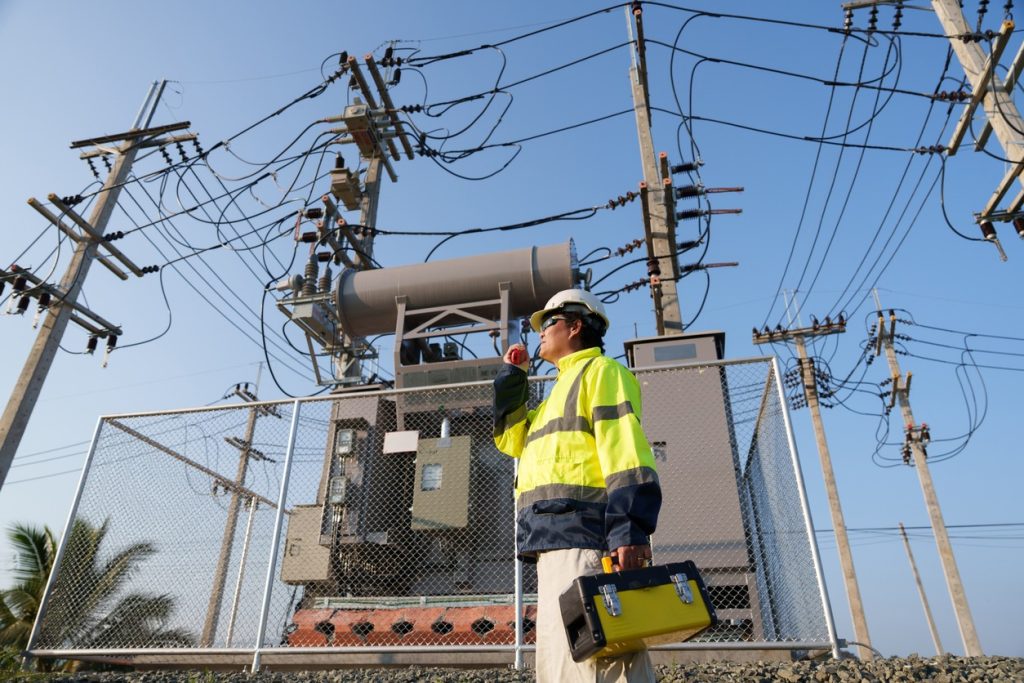
Low voltage systems remain the standard for commercial buildings and many industrial facilities because they offer a practical, cost-effective solution for moderate electrical loads. Medium voltage systems, however, become increasingly advantageous as facilities grow larger, distribution distances increase, or power demands exceed what is practical to serve at low voltage. This guide compares low-voltage vs. medium-voltage systems, explains where each performs best, and outlines the engineering considerations that should drive system selection.
What Is the Difference Between Medium Voltage and Low Voltage Systems?
The primary difference between medium voltage (MV) and low voltage (LV) systems is the voltage used to distribute electrical power throughout a facility. In North America, low voltage generally refers to systems operating at 1,000 volts AC or below, while medium voltage typically ranges from above 1 kV to approximately 35 kV, depending on the applicable standards and utility practices.
Although organizations such as IEEE, IEC, ANSI, and the National Electrical Code (NEC) define these ranges slightly differently, the distinction is important because each system has unique infrastructure, protection, maintenance, and lifecycle considerations.
| Feature | Low Voltage | Medium Voltage |
| Typical Operating Range | Up to 1,000 V AC | Above 1 kV to approximately 35 kV |
| Primary Purpose | Equipment utilization | Facility power distribution |
| Typical Equipment | Panelboards, switchboards, MCCs, circuit breakers | Switchgear, substations, transformers, relays |
| Distribution Distance | Short to moderate | Medium to long distances |
| Cable Requirements | Larger conductors for high loads | Smaller conductors for equivalent power |
| Transformer Requirements | Distribution transformers | Primary substations and step-down transformers |
| Typical Applications | Commercial buildings, light industry | Heavy industry, utilities, campuses, large manufacturing |
When Low Voltage Systems Are the Better Choice
Low voltage systems are the foundation of electrical distribution for most commercial facilities and many industrial operations. When electrical demand is moderate and equipment is concentrated within a relatively compact area, low voltage distribution provides a practical and cost-effective solution.
Typical applications include:
- Commercial office buildings
- Educational facilities
- Hospitals
- Retail centers
- Warehouses
- Food processing facilities
- Small manufacturing plants
- Municipal buildings
- Light industrial operations
Lower Initial Cost
One of the primary advantages of low voltage systems is their lower installation cost. Equipment such as motor control centers (MCCs), switchboards, panelboards, and circuit breakers is generally less expensive than comparable medium voltage equipment. The supporting infrastructure is also simpler, reducing engineering complexity during construction and commissioning.
Easier Maintenance
Routine maintenance is typically less demanding because most industrial electricians are familiar with low voltage equipment. Inspections, testing, and repairs generally require fewer specialized tools and certifications, helping reduce long-term maintenance costs.
Simpler Protection
Low voltage systems usually have less complex protection schemes than medium voltage installations. While selective coordination remains essential, lower available fault currents often simplify protective device coordination.
Suitable for Shorter Distribution Distances
For compact facilities, voltage drop can usually be managed with properly sized conductors, making low voltage distribution an economical choice. However, as electrical loads and distribution distances increase, conductor sizes, feeder costs, and voltage drop become more significant, making medium voltage distribution a more efficient alternative.
When Medium Voltage Systems Make More Sense
Medium voltage systems become increasingly beneficial as electrical demand, distribution distances, and facility size grow. By distributing power at a higher voltage and lower current, engineers reduce I²R losses, improve voltage regulation, and increase overall system efficiency before stepping the voltage down closer to the point of use.
Common applications include:
- Oil and gas facilities
- Chemical processing plants
- Mining operations
- Steel mills
- Pulp and paper facilities
- Data centers
- Utility substations
- Water and wastewater treatment plants
- Large manufacturing campuses
- Renewable energy facilities
Beyond improved efficiency, medium voltage systems offer several engineering advantages.
Improved Distribution Efficiency
Higher voltage enables more efficient power transmission by reducing current, minimizing resistive losses, and maintaining better voltage regulation over long feeder runs.
Smaller Cable Requirements
Lower current allows engineers to use smaller conductors for the same power demand, reducing cable material and installation costs across large facilities.
Better Support for Large Motors
Medium voltage is well suited for large industrial motors, reducing starting current, minimizing voltage sag, and improving overall system stability during motor startup.
Greater Scalability and Reliability
Medium voltage infrastructure is easier to expand as facilities grow and supports advanced distribution designs with multiple substations, redundant feeders, and selective fault isolation to improve operational continuity.
Although medium voltage systems require a higher initial investment, they often provide lower lifecycle costs for facilities with high electrical demand by improving efficiency, supporting future expansion, and enhancing long-term reliability.
Medium Voltage vs Low Voltage: Performance Comparison
Both voltage levels play essential roles in modern electrical infrastructure, but each offers distinct advantages depending on the application.
| Engineering Consideration | Low Voltage | Medium Voltage |
| Initial Equipment Cost | Lower | Higher |
| Installation Complexity | Lower | Higher |
| Distribution Efficiency | Best for shorter distances | Best for long-distance distribution |
| Voltage Drop | Increases with long feeders | Lower over comparable distances |
| Conductor Size | Larger for high loads | Smaller for equivalent power |
| Future Expansion | More limited | Excellent scalability |
| Maintenance Requirements | Less specialized | Specialized personnel required |
| Protective Coordination | Simpler | More sophisticated |
| Arc Flash Hazard | Lower overall incident energy | Higher potential incident energy requiring additional safety measures |
| Typical Facility Size | Commercial and light industrial | Large industrial and utility facilities |
Key Engineering Factors When Selecting a Voltage Level
Choosing between medium voltage and low voltage involves more than comparing equipment ratings. Engineers must balance current operational requirements with long-term performance, reliability, maintainability, and future expansion.
Here are a few things worth considering.
Facility Electrical Load
Total connected load is one of the first factors engineers evaluate. As power demand increases, medium voltage distribution becomes more practical by reducing current, minimizing I²R losses, and improving system efficiency. Load studies should also account for demand factors, motor starting requirements, continuous process loads, and future growth.
Distribution Distance
Facility size plays a major role in voltage selection. Low voltage is well suited for compact facilities, while medium voltage distributes power more efficiently over longer distances by reducing voltage drop and conductor size.
Motor Size and Process Equipment
Large motors draw significant starting current, which can cause voltage sag. Medium voltage motors reduce these effects, making them well suited for compressors, pumps, crushers, mills, and other heavy industrial equipment.
System Reliability
Facilities with critical operations often require redundant feeders, multiple substations, and selective fault isolation. Medium voltage systems offer greater flexibility for designing reliable electrical distribution networks, particularly in large industrial facilities.
Protection and Fault Current
Proper protection coordination is essential regardless of voltage level. Engineers perform short-circuit, protective device coordination, and arc flash studies to verify equipment ratings, improve system reliability, and enhance personnel safety.
Maintenance Resources
Medium voltage equipment requires specialized testing, maintenance procedures, and qualified personnel. These ongoing requirements should be considered when evaluating lifecycle costs.
Future Expansion
Facilities often grow over time through additional production lines, equipment, or buildings. Designing for future electrical demand helps avoid costly upgrades, and medium voltage infrastructure generally offers greater flexibility for long-term expansion.
Medium Voltage vs Low Voltage: Which One Should You Choose?
While every facility requires an engineering evaluation, the following comparison provides a practical starting point.
| If Your Facility… | Recommended Choice |
| Has relatively short feeder runs | Low Voltage |
| Primarily serves lighting, HVAC, and standard commercial loads | Low Voltage |
| Has limited electrical demand | Low Voltage |
| Requires simple maintenance procedures | Low Voltage |
| Covers a large industrial campus | Medium Voltage |
| Has multiple large motors or process equipment | Medium Voltage |
| Expects significant future expansion | Medium Voltage |
| Requires efficient long-distance power distribution | Medium Voltage |
| Consumes several megawatts of power | Medium Voltage |
| Needs high system reliability with multiple substations | Medium Voltage |
Please note: This table provides general guidance; selecting the appropriate voltage level should always be supported by electrical load studies, short-circuit analysis, protective device coordination, voltage drop calculations, and long-term lifecycle planning.
Can a Facility Use Both Medium Voltage and Low Voltage Systems?
Yes. In fact, many industrial facilities rely on both medium voltage and low voltage systems as part of a single electrical distribution network.
A utility typically supplies power to a facility at medium voltage. The electricity enters the site through a service entrance or substation, where medium voltage switchgear distributes power to various areas of the facility. Distribution transformers then step the voltage down for low voltage equipment such as lighting, HVAC systems, motor control centers, receptacles, and smaller motors.
This approach combines the efficiency of medium voltage distribution with the flexibility and compatibility of low voltage utilization equipment. As a result, it is the preferred architecture for many manufacturing facilities, refineries, processing plants, hospitals, universities, and large commercial campuses.
Frequently Asked Questions on Medium Voltage vs Low Voltage Systems
Here are some of the most common questions for medium and low voltage systems.
Medium voltage generally refers to electrical systems operating above 1,000 volts AC and up to approximately 35 kV in most North American industrial applications. The exact classification may vary depending on standards such as IEEE, IEC, ANSI, and the National Electrical Code, as well as utility practices.
Low voltage typically refers to electrical systems operating at 1,000 volts AC or below. Common industrial and commercial voltages include 120 V, 208 V, 240 V, 277 V, 480 V, and 600 V.
Neither system is inherently better. Low voltage is generally the preferred choice for smaller facilities with moderate electrical demand, while medium voltage becomes more practical for large industrial facilities, extensive distribution networks, and applications requiring higher power capacity or future scalability.
Facilities should evaluate an upgrade when electrical demand increases significantly, distribution distances increase, multiple large motors are added, or planned expansion exceeds the practical limits of the existing low-voltage infrastructure.
Yes. Because medium voltage systems transmit power at lower current, conductor losses are reduced. This improves overall distribution efficiency, particularly in large facilities with long feeder runs and high electrical loads.
Designing the Right Power Distribution System With Paradigm Controls
Paradigm Controls partners with industrial facilities, utilities, and infrastructure projects to develop electrical systems that align with operational requirements today while preparing for tomorrow’s demands.
We have specialists from power system studies and protective device coordination to switchgear modernization, arc flash analysis, system integration, and electrical infrastructure upgrades. Our engineering team helps organizations design, optimize, and maintain safe, reliable, and scalable power distribution systems. Get in touch today for a personalized service offering!