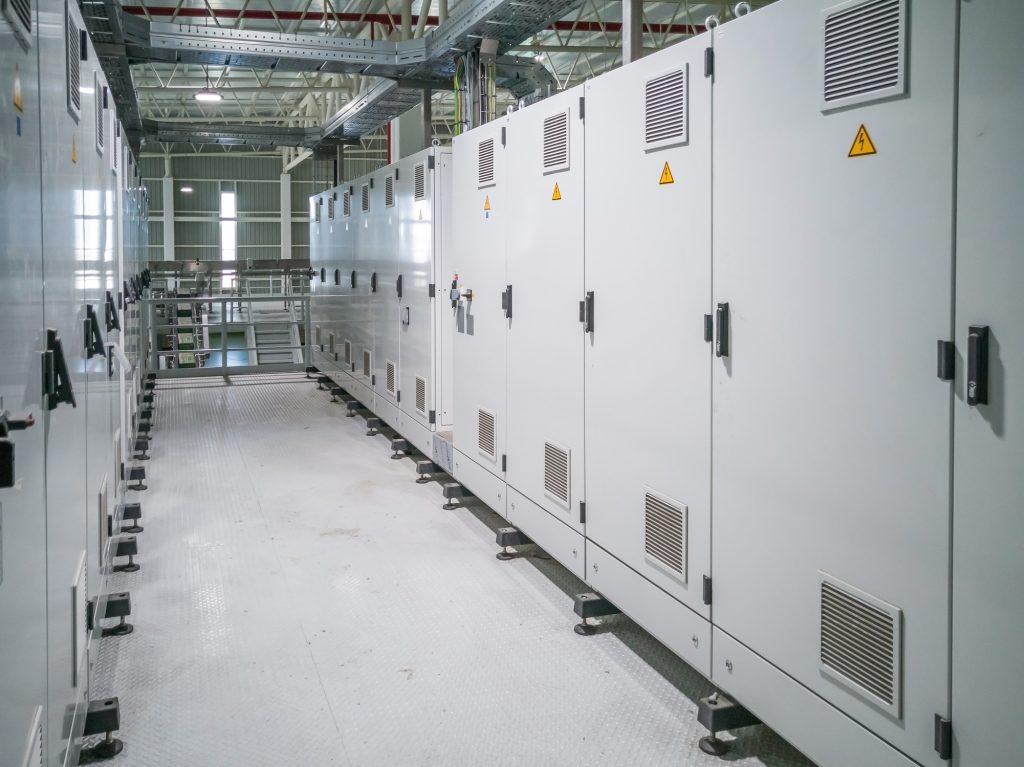
A Power Distribution Center (PDC) is essential for managing and distributing electrical power across industrial and commercial facilities. This article explores what a PDC is, its key components—including transformers, circuit breakers, and switchgear—and its role in ensuring reliable power distribution. We’ll also discuss critical considerations for PDC installation, such as load requirements, safety standards, and environmental factors.
What is a Power Distribution Center?
A Power Distribution Center(PDC) is a centralized electrical unit that manages and distributes power within an industrial, commercial, or residential facility. It is a modular structure containing various components, such as switchgear, circuit breakers, transformers, and motor control centers.
The power supply from the substation or transmission line first goes through a PDC system before supplying for end use. PDC stabilizes it for safe distribution in case of any voltage fluctuation or error in supply.
Most industries, residential buildings, and commercial facilities use a single-point modular distribution unit. This involves enclosing all necessary components with an outside monitoring display. Modular PDCs reduce the overall cost and make the installation process simple.
Moreover, the market size of power distribution centers was $3.31 billion in 2022 and is expected to reach $9.8 billion by 2030. This shows the importance and growing uses for reliable electrical supply across all sectors.
Key Components of A Power Distribution Center
By structure, a powder distribution center is a modular box with a door lock, mounting, and other features, inside which components are wired and attached in distinct compartments. Although its components may vary according to the application, there are key components usually present, which the following sections highlight.
Transformers
Transformers are the gateways into PDCs as power from the feeders is typically connected to them directly. Depending on the end-use requirement, they serve to either step up or step down the supply voltage. They play a crucial role in improving energy efficiency by minimizing power losses during transmission and distribution. Moreover, different types of transformers—such as dry-type and oil-filled—can serve depending on environmental and operational needs.
Circuit Breakers
Circuit breakers serve as protective devices that automatically disconnect electrical circuits in the event of a fault. They prevent damage to equipment and reduce the risk of electrical fires. PDCs commonly use different types of circuit breakers, including molded case circuit breakers (MCCBs) and also vacuum circuit breakers (VCBs), to protect various sections of the distribution system.
Switchgear
Switchgear consists of electrical disconnect switches, fuses, and circuit breakers that control, protect, and isolate electrical equipment. It ensures safe operation by preventing electrical faults and minimizing damage during short circuits or overload conditions. Switchgear can be classified into air-insulated switchgear (AIS) and gas-insulated switchgear (GIS), depending on the insulation medium in use.
Busbars
Busbars are metallic strips or bars that conduct electricity within a switchboard, distribution board, or substation. They act as a central point for collecting and distributing electrical power. Busbars provide a reliable and efficient means of distributing power to various circuits and equipment within the distribution center.
Control Panels
Control panels house meters, relays, and control switches that monitor and manage power distribution. Operators use control panels to track voltage levels, current flow, and system status, ensuring smooth operation and quick response to any anomalies.
AC/DC Panels
AC/DC panels distribute different power types, with AC power for larger equipment and DC power for smaller devices and sensors, ensuring all equipment receives the correct power type for various applications.
UPS System
The UPS system delivers uninterrupted power during outages, protecting critical equipment from sudden shutdowns and ensuring smooth operations even without main power.
HVAC Systems
HVAC systems maintain safe operating temperatures, preventing overheating and ensuring efficient component operation and equipment longevity. PDCs are always fitted with HVAC systems and vents that ensure safe operating temperatures. The sizing of the HVAC system should be accurate to ensure equipment is properly cooled.
Power Distribution Center Enclosure
PDC housings protect delicate electrical equipment from extreme weather conditions, temperature variations, and other potential hazards. Hence, ensuring the equipment’s longevity and operational reliability. As a result, its enclosure consists of high-impact materials like stainless steel, aluminum, PVC, and Fiberglass Reinforced Polyester (FRP). Consequently, IEC 60529 is the safety standard for the enclosures.
Role in Reliable Power Distribution
Power distribution centers are essential for reliable electricity distribution in any building, factory, or residence. A PDC acts as a midpoint between the grid supply and equipment consuming power, giving all supply control. They are also beneficial for overall efficiency.
The key points of importance are as follows:
- Voltage Regulation: Power distribution centers use transformers to reduce high transmission voltages to lower levels suitable for distribution. Moreover, voltage regulators and capacitors maintain consistent voltage levels to prevent fluctuation through a transformer.
- Load Balancing and Management: The uniform distribution across multiple feeders prevents overloads. PDC allows the demand to change by adjusting the supply in real time.
- Quality of Power Supply: Equipment in the PDC can also reduce the harmonic distortions from non-linear loads. It supports reactive power compensation through capacitors and reactors, which improves the power factors of the electrical supply and reduces losses.
- System Monitoring: Real-time monitoring systems can be integrated within a distribution center for real-time monitoring and responses. Thus, making possible the monitoring of key parameters such as voltage, current, frequency, etc.
- Fault Detection: Protective relays in PDC continuously monitor network abnormalities and isolate the section if the fault is detected. It also signals the monitor board for necessary human intervention.
Considerations for Power Distribution Center Installation
Several critical considerations must be taken into account when installing power distribution centers to ensure safety, reliability, and optimal performance. These include assessing load requirements, adhering to safety standards, and considering environmental factors.

Load Requirements
Understanding the total electrical load of a facility is essential for selecting the appropriate PDC capacity. Engineers must evaluate power demands on the basis of current and future expansion needs to prevent overloading and also inefficiencies.
Safety Standards and Compliance
PDCs must comply with industry safety regulations, such as the National Electrical Code (NEC) and IEEE standards. Proper grounding, insulation, and circuit protection measures should be in place to minimize electrical hazards.
Environmental Factors
The installation environment plays a significant role in determining the type of PDC and its components. For instance, outdoor installations require weatherproof enclosures, while facilities in corrosive environments may need specialized protective coatings.
Redundancy and Backup Systems
To enhance reliability, facilities should consider redundancy in PDC design. This includes backup transformers, parallel switchgear configurations, and alternative power sources such as generators or uninterruptible power supply (UPS) systems.
Space and Layout Optimization
Efficient use of space is important in PDC design. Engineers must ensure that the layout allows for easy access to components for maintenance and future upgrades. Modular PDCs offer flexibility in confined spaces.
Remote Monitoring and Automation
Modern PDCs integrate automation and remote monitoring systems that provide real-time data on power usage, fault conditions, and energy efficiency. These technologies enable proactive maintenance and improve overall system performance.
Power Distribution Centers with PCTX
Paradigm Controls provides prefabricated power distribution centers to meet even the most demanding project specifications and power distribution requirements. Our PDCs come in configurations that can accommodate control systems for a wide range of energy delivery systems. These include, but are not limited to:
- High-voltage substation protective relay and control buildings.
- Arc flash mitigation systems that enable remote and automated operation.
This provides a safe environment for at-risk system operators. Our PDCs also serve as marshaling control facilities, housing remote automation devices, and acting as a central hub for hardware. Contact us today for more details and we can partner in delivering the most cost-effective solution for you.