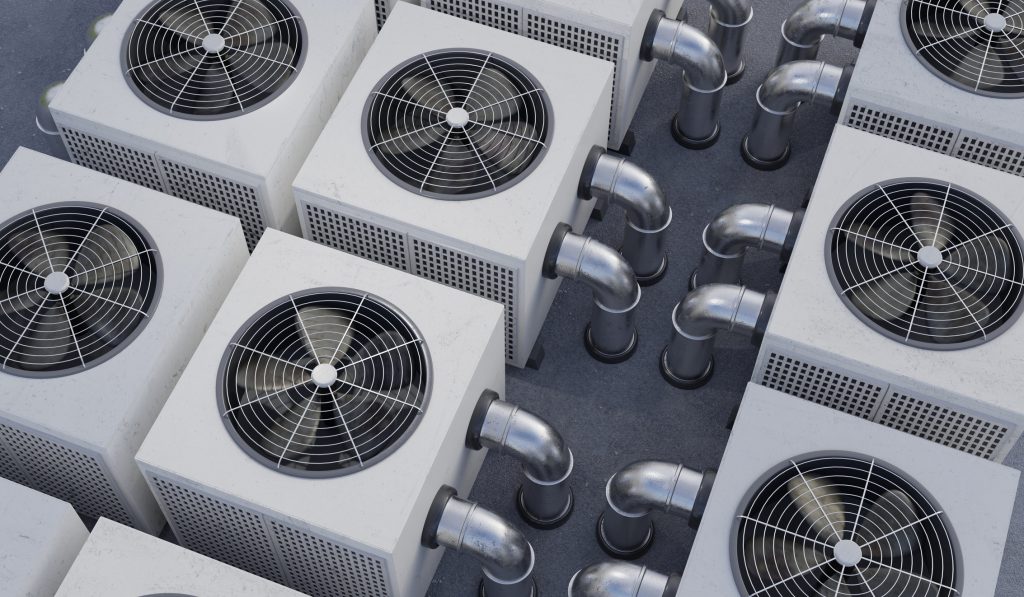
Proper HVAC sizing is essential for ensuring comfort, efficiency, and cost savings in residential, commercial, and industrial spaces. This article reviews the importance of proper HVAC sizing, as well as calculating HVAC capacity using a sizing chart and sizing calculator.
What are HVAC Systems
HVAC refers to Heating, Ventilation, and Air Conditioning systems that serve to regulate the indoor temperature and humidity level. For example, commercial AC, heat pumps, centralized heating systems, boilers, refrigerants, humidifiers, etc. Generally, HVAC systems consist of the following components:
- Heating Elements: They generate and distribute heat, such as electrical furnaces, wire bindings, and heat pumps.
- Ventilation Components: These components circulate and filter the air, such as air filters, ducts, and exhaust vents.
- AC Components: These serve for cooling and dehumidification of air, such as compressors, chillers, and evaporator coils.
- Humidity Controllers: They manage water vapor by adding or removing moisture. Examples include humidifiers, dehumidifiers, and diffusers.
- System Controllers: The operating interfaces and sensors used to control the desired comfort.
The commercial HVAC includes a compact design of these components. Air handling units circulate the conditioned air, the cooling tower or chillers remove heat from the air, and the boiler generates heat. Moreover, the filters and air purifiers enhance indoor air quality by removing pollutants and micro-contamination.
Importance of Proper HVAC Sizing
Proper HVAC sizing directly influences the performance, comfort, and overall cost of the system. The following sections highlight the importance of HVAC sizing.
Energy Efficiency and Cost Savings
Proper HVAC sizing plays a critical role in maximizing energy efficiency and reducing operational costs. An undersized system consumes excessive energy as it works harder to meet temperature demands, leading to higher utility bills. Conversely, an oversized system cycles on and off frequently, wasting energy and increasing wear and tear on components. A study on medium-sized offices in the US shows that the 50 % oversizing of Air conditioning systems can increase energy costs by up to 39%. Consequently, optimal size also reduces the maintenance cost over time. By ensuring the system is correctly sized, homeowners and businesses can maintain optimal energy use. Hence, reducing carbon footprints and achieving significant cost savings over the system’s lifespan. A well-sized HVAC system also supports energy efficiency standards and sustainability goals.
Indoor Comfort
An accurately sized HVAC system ensures consistent indoor temperatures and improved comfort levels. An undersized system struggles to cool or heat the space adequately, leading to temperature fluctuations and hot or cold spots. On the other hand, an oversized system cools or heats the space too quickly. Thus, failing to remove excess humidity and creating a stuffy or clammy indoor environment. Proper sizing allows the HVAC system to maintain a steady temperature. This ensures a balanced airflow, as well as a comfortable living or working space throughout the year.
Longer Equipment Lifespan
When an HVAC system is properly sized, it operates efficiently without unnecessary strain. As a result, extending the lifespan of critical components such as compressors, fans, and heat exchangers. An undersized system runs continuously, causing excessive wear and early system failure, while an oversized system undergoes frequent start-stop cycles that strain electrical and mechanical parts. By choosing the right size, the system operates within its designed capacity. Therefore, reducing the risk of breakdowns and prolonging its service life, ultimately saving money on repairs and replacements.
Indoor Air Quality
Proper HVAC sizing and operation are essential for maintaining indoor air quality (IAQ). An adequately sized system will regulate humidity levels effectively, as both oversized and undersized systems can contribute to humidity control issues. Oversized units typically cool spaces quickly but fail to remove adequate moisture from the air, creating a damp environment conducive to mold growth. Conversely, undersized systems struggle to maintain comfortable humidity levels. By ensuring optimal sizing, HVAC systems can filter out pollutants and maintain balanced humidity, resulting in a healthier indoor environment for occupants.
Optimized Humidity Control
A properly sized HVAC system helps maintain ideal humidity levels, which is crucial for occupant comfort and preventing damage to the building structure. An oversized system cools too quickly, failing to dehumidify the air effectively, leading to a damp and uncomfortable environment. On the other hand, an undersized system may not remove enough moisture, causing high humidity levels that can encourage mold growth and structural issues. With the right HVAC sizing, the system can effectively balance temperature and humidity, ensuring a comfortable and healthy indoor environment.
Preventing Short Cycling and System Inefficiency
Short cycling, which occurs when an oversized HVAC system turns on and off rapidly, leads to inefficient operation and unnecessary wear on the system. This frequent cycling wastes energy, increases utility bills, and places strain on the compressor and other components. Proper HVAC sizing prevents short cycling by allowing the system to run for the appropriate duration to achieve and maintain the desired indoor temperature. This ensures smooth operation, optimal performance, and reduced maintenance needs over time.
HVAC Sizing Chart
An HVAC sizing chart is an essential tool that helps homeowners and professionals determine the optimal size of their HVAC systems. These charts provide clear guidelines on the basis of several factors. Some of these include the square footage of a home, insulation quality, and climate zone. By effectively using a sizing chart, individuals can make informed decisions regarding HVAC system installations or upgrades, ensuring maximum comfort and energy efficiency.
How an HVAC Sizing Chart Works
The chart categorizes cooling and heating capacity in BTUs (British Thermal Units) based on the area’s square footage. It factors in ceiling height, windows, and insulation to improve accuracy. Larger spaces with poor insulation need higher capacity systems, while smaller, well-insulated areas require less. Although the chart provides useful guidelines, professional load calculations ensure precise system selection.
Benefits of Using an HVAC Sizing Chart
An HVAC sizing chart simplifies decision-making and reduces the risk of choosing the wrong system. It allows easy comparisons and helps homeowners plan their budgets. By using the chart, property owners gain a better understanding of their HVAC needs before consulting professionals. This approach saves time and promotes informed decisions.
Limitations of Using an HVAC Sizing Chart
Although helpful, an HVAC sizing chart cannot replace professional assessments. It may not account for factors like occupancy, appliance heat loads, and air leakage. Relying solely on the chart can lead to inefficiencies. For accurate results, it’s important to consider all factors that impact heating and cooling needs.
Sample HVAC Sizing Chart
Below is an example of a typical HVAC sizing chart on the basis of square footage.
| Square Footage Range (sq. ft) | Cooling Capacity (BTU/hr) | Cooling Capacity (Tons) | Heating Capacity (BTU/hr) |
| 100 – 150 | 5,000 | 0.42 | 6,000 – 9,000 |
| 150 – 250 | 6,000 | 0.5 | 9,000 – 12,500 |
| 250 – 300 | 7,000 | 0.58 | 12,500 – 15,000 |
| 300 – 350 | 8,000 | 0.67 | 15,000 – 17,500 |
| 350 – 400 | 9,000 | 0.75 | 17,500 – 20,000 |
| 400 – 450 | 10,000 | 0.83 | 20,000 – 22,500 |
| 450 – 550 | 12,000 | 1 | 22,500 – 27,500 |
| 550 – 700 | 14,000 | 1.17 | 27,500 – 35,000 |
| 700 – 1,000 | 18,000 | 1.5 | 35,000 – 50,000 |
| 1,000 – 1,200 | 21,000 | 1.75 | 50,000 – 60,000 |
These values offer a general estimate. However, factors like ceiling height, sun exposure, and insulation may influence final system sizing.
HVAC Sizing Calculator
Besides the space area, other factors influence the HVAC sizing, such as room ceiling height, number of people, function of space(bedroom, living room, kitchen, workspace, etc), insulation condition, sunlight exposure, and climate. The Manual J method incorporates these factors in the calculation to precisely determine the heating and cooling load. Moreover, this method is standardized by Air Conditioning Contractors of America (ACCA), and widely accepted across the world. Also, this method forms the basis of various industry software used in these calculations.
Furthermore, there are also online HVAC sizing calculators, which eliminate the requirements of detailed simulation or modeling to find out the size. Instead, it allows you to input some basic parameters and provides the best sizing in BTU.
HVAC Sizing with Paradigm Controls
Entrusting your HVAC needs to Paradigm Controls ensures that they will be met as our services encompass drafting, design, as well as oversight. Even for already existing infrastructure, we offer life extension services with our HVAC Preventive Maintenance Program being second to none. Contact us today for more details and we can get started immediately on your project.