Gas Insulated Switchgear (GIS) substations are essential in modern electrical power systems, offering enhanced safety, reliability, and efficiency. This article explores what a gas-insulated switchgear substation is, its technology types, safety concerns, monitoring, as well as earthing.
What is a Gas Insulated Switchgear Substation
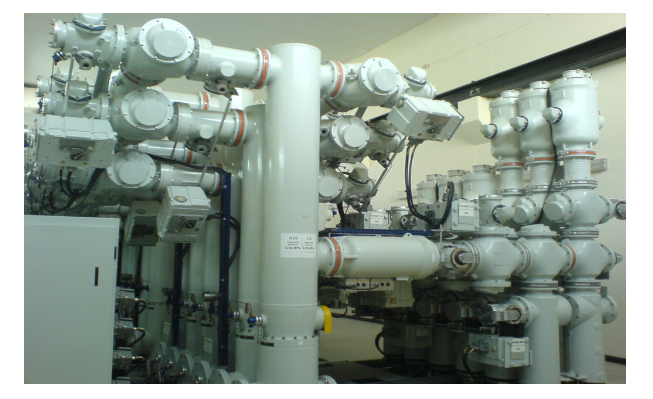
A Gas Insulated Switchgear (GIS) substation is a compact and efficient power system that relies on sulfur hexafluoride (SF6) gas for insulation. Unlike conventional air-insulated substations, GIS houses all switching and transmission equipment within sealed metallic enclosures filled with SF6 gas. This innovative design significantly reduces space requirements, hence, making it ideal for urban or constrained areas. Also, SF6 gas excels in providing superior insulation and arc-quenching properties, ensuring reliability in high-voltage applications. Moreover, the sealed enclosures protect critical components from environmental hazards such as dust, moisture, and wildlife, enhancing durability and performance.
Key Components of Gas Insulated Switchgear Substation
- Circuit Breakers: These are devices that can interrupt the flow of current in an electrical circuit when a fault occurs.
- Disconnectors: Disconnector switches provide visible isolation points for maintenance work, operating only when the circuit is already de-energized.
- Earth Switches: These components temporarily connect high-voltage conductors to the ground, ensuring safety during maintenance operations.
- Instrument Transformers: Instrument transformers step down current and voltage to measurable levels for monitoring and protection purposes.
- Busbars: Busbars are conductors that distribute power between different sections of the substation and also connect various equipment.
- Cable End Terminals: These components provide connection points between the GIS and external power transmission cables.
- Gas-Filled Compartments: These sealed enclosures contain SF6 gas and house all the active components of the system.
Operating Principle of Gas Insulated Switchgear Substation
During normal operation, electricity flows seamlessly through the GIS, with circuit breakers and transformers actively controlling and monitoring the system. At the same time, busbars facilitate continuous power transmission. When a fault occurs or maintenance is necessary, disconnectors isolate specific sections of the substation to ensure safety, while circuit breakers interrupt the current flow to prevent further issues. If an electrical arc forms, the SF6 gas quickly absorbs the energy and extinguishes the arc, minimizing potential damage and ensuring uninterrupted performance. The system’s sealed design plays a crucial role in maintaining reliability by protecting all components from external factors like dust, moisture, and temperature fluctuations, thus, ensuring smooth and stable operation under various conditions.
Technology Types of Gas Insulated Switchgear Substations
Insulation Gas
- SF6: This is the primary insulation medium in most GIS installations due to its superior dielectric properties. Modern systems use SF6 at pressures ranging from 400 to 600 kPa for optimal performance
- SF6 mixture with N2: Combines SF6 with nitrogen to reduce environmental impact while maintaining insulation properties. Requires higher operating pressures but reduces the overall SF6 gas volume. Another advantage of this combination is that it provides a more cost-effective solution for medium voltage applications.
- SF6 free: Some manufacturers now offer hybrid solutions that combine SF6 with other gases. Recent developments include eco-friendly alternatives like g3 (Green Gas for Grid) and clean air technology to address environmental concerns.
Phase Arrangement
GIS substations employ two main phase arrangements based on voltage levels and space requirements.
- Single-phase systems: Houses each phase in separate compartments, offering better maintenance access.
- Three-phase systems: Encloses all phases within one housing, resulting in a more compact design.
Voltage Level
GIS substations operate across various voltage ranges to meet different power distribution needs.
- Medium voltage systems: Typically range from 3 kV to 36kV.
- High voltage systems: Applications cover 72.5kV to 170kV.
- Extra-high voltage systems: Operate above 170kV, and even reaching up to 800kV.
- Ultra-high voltage systems: Installations exceed 800kV for specialized applications.
Application Type
Indoor GIS installations provide complete protection from environmental factors and are ideal for urban areas. These systems require climate-controlled buildings with proper ventilation systems.
Outdoor GIS installations use weather-resistant enclosures and are suitable for rural locations. They offer cost advantages by eliminating the need for buildings.
Safety Concerns of Gas Insulated Switchgear Substation
Safety considerations in GIS substations focus on both personnel and equipment protection.
Gas-Related Safety
Managing SF6 gas in GIS equipment requires strict safety protocols due to its potential hazards. Leakage in confined spaces can displace oxygen, leading to suffocation risks. As a result, regular monitoring of gas pressure and density is crucial to prevent insulation failure. Moreover, decomposed SF6 products, which are toxic and corrosive, demand careful handling during maintenance. So, robust ventilation systems are necessary to mitigate risks associated with accidental gas releases.
Electrical Safety
High-voltage GIS equipment requires stringent measures to ensure electrical safety. Access to these systems must be strictly controlled, and safety clearances must be adhered to. Proper earthing procedures are essential before any maintenance activities to prevent electrical shocks.
Operational Safety
Only trained and certified personnel should handle GIS equipment to ensure safe operations. It is necessary to document, as well as adhere to switching procedures. Regular safety drills and emergency response training help in preparing teams for potential hazards. During maintenance, the use of Personal Protective Equipment (PPE) is mandatory to minimize risks.
Environmental Safety
Environmental safety in GIS operations involves proper handling of SF6 gas to prevent ecological harm. Procedures for gas recovery and recycling must comply with environmental regulations. Routine checks for gas leakage are essential to reduce environmental impact. End-of-life equipment must be disposed of following established guidelines, with detailed records maintained for all gas handling and disposal activities.
Maintenance Safety
Effective maintenance safety practices are vital for GIS reliability. Lock-out/tag-out procedures must be strictly enforced to prevent accidental equipment activation. Regular inspection of seals and gaskets is necessary to avoid gas leakage. Maintenance work requires the use of specialized tools and equipment, as well as safety barriers along with clear warning signs around work areas.
Emergency Response
Preparedness for emergencies is critical in GIS operations. Clearly documented emergency shutdown procedures should be readily accessible. First-aid equipment and emergency contact details must be easily available. Comprehensive evacuation plans for gas leakage scenarios should be established, also, emergency response systems must be routinely tested to ensure readiness.
Quality Control
Maintaining high-quality standards in GIS operations contributes to overall safety. Periodic testing of SF6 gas quality is essential to ensure optimal insulation properties. Monitoring for partial discharges helps detect early signs of insulation breakdown. Thermal imaging can identify hot spots, hence, preventing potential failures. All safety-related tests and inspections must be meticulously documented to track compliance, as well as performance.
Gas Insulated Switchgear Substation Monitoring
Modern GIS installations incorporate comprehensive monitoring systems for reliable operation. Online gas density sensors continuously track insulation integrity. Temperature monitoring prevents overheating of critical components. Partial discharge detection systems identify potential insulation weaknesses. Smart sensors enable predictive maintenance through data analytics. Remote monitoring capabilities allow for quick response to potential issues.
Gas Insulated Switchgear Substation Earthing
Effective earthing plays a vital role in ensuring the safety and reliability of a GIS substation. Properly grounding all metallic enclosures prevents electrical hazards and enhances overall system performance. Establishing multiple earthing points helps distribute electrical potential evenly, thus, reducing the risk of dangerous surges. To protect the system from lightning strikes and switching transients, surge arresters work actively to divert excess energy safely. Regularly testing earth resistance ensures the system remains robust and reliable over time. In addition, cable terminations demand special care, with shield bonding expertly applied to maintain a secure and efficient connection.
Gas-Insulated Switchgear from Paradigm Controls
Paradigm Controls delivers expert engineering solutions for state-of-the-art Gas-Insulated Switchgear installations and Air-Insulated Switchgear systems. Our specialized team works closely with clients to optimize GIS configurations for durability and operational excellence. Backed by twenty years of industry leadership, we ensure every system meets international quality standards and performance requirements. Contact us today to explore the right switchgear solution for your facility.