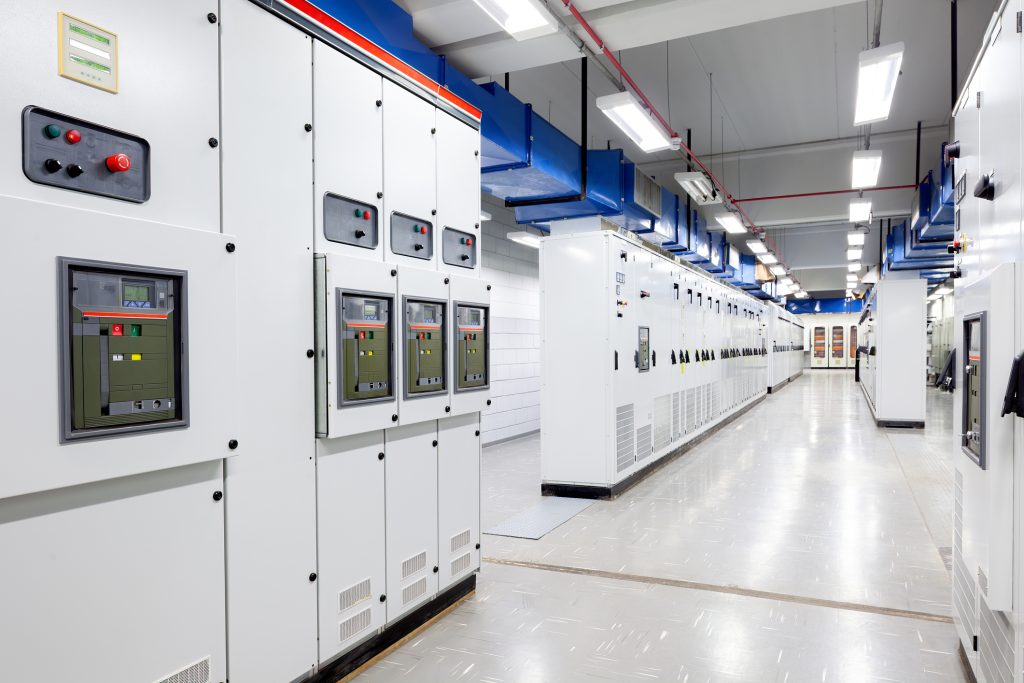
Low-voltage (LV) switchgear plays a critical role in electrical power distribution. It provides protection, control, and isolation for circuits operating at up to 1,000V AC or 1,500V DC. This article explores the components of low-voltage switchgear, compares it to higher-voltage systems, and examines how it supports various industries.
What is Low Voltage Switchgear?
Low-voltage switchgear refers to a combination of electrical devices designed to manage, protect, and isolate circuits operating at voltages up to 1,000 volts AC and 1,500 volts DC. It ensures the safe and efficient distribution of power in residential, commercial, and industrial environments.
By actively managing the electrical flow, LV switchgear protects systems from overloads, short circuits, and other faults. It also enables safe maintenance without disrupting the entire network, making it a cornerstone of modern power systems.
How LV Switchgear Differs from Medium and High Voltage Switchgear
Voltage Range and Function
| Low-Voltage Switchgear | Medium-Voltage Switchgear | High-Voltage Switchgear |
| Up to 1,000V AC / 1,500V DC. Distributes power to motors, lighting, HVAC, and other end-use equipment. | 1,000V to 35,000V AC. Connects high-voltage systems to LV distribution, often in substations and large industrial facilities. | Above 35,000V AC. Transmits bulk power over long distances, supporting national grids and utility networks. |
Key Components
| Low-Voltage Switchgear | Medium-Voltage Switchgear | High-Voltage Switchgear |
| Utilizes molded-case circuit breakers (MCCBs), air circuit breakers (ACBs), and copper or aluminum busbars. | Includes vacuum circuit breakers (VCBs) or SF₆ breakers, and tubular insulated conductors. | Relies on SF₆ or oil-insulated breakers and large gas-insulated busbars. |
Design and Construction
| Low-Voltage Switchgear | Medium-Voltage Switchgear | High-Voltage Switchgear |
| Use air insulation or epoxy molds with compact, modular enclosures, for example, a 600mm panel, and minimal phase spacing with measurements of 10-20mm. | Employ vacuum interrupters or SF6 gas insulation, requiring larger enclosures, 2 m-wide cubicles, and greater phase segregation of 50-100mm. | Relies on SF6 gas or oil insulation in massive, isolated structures such as insulated switchgear bays, with a phase clearance in several meters to prevent arcing. |
Cost and Maintenance
| LV Switchgear | MV Switchgear | High-Voltage Switchgear |
| Cost between $1,000 and $10,000. They’re easy to maintain using thermography and contact resistance checks. | Range from $50,000 to $500,000 per bay and require specialized diagnostics such as SF₆ gas analysis. | Installations cost $1M to $20M per bay and demand advanced inspections like robotic testing and seismic qualification. |
Standard Compliance
| LV Switchgear | MV Switchgear | HV Switchgear |
| LV adheres to IEC 61439 for temperature rise and dielectric tests. | Complies with IEC 62271 for partial discharge limits. | HV complies with IEC 62271-203 for lightning impulse (550kV) and seismic resilience. |
Safety Considerations
LV switchgear emphasizes operator safety with arc-resistant enclosures (≤40 cal/cm²) and IP-rated protection against dust and water. It allows for live maintenance with appropriate PPE. In contrast, MV and HV systems require remote operation or robotic tools due to higher arc energy levels (often exceeding 100 cal/cm²).

Key Components of Low-Voltage Switchgear
Circuit Breakers
Circuit breakers protect circuits from overloads and short circuits. For example, a hospital may use ACBs to protect its main power feed and prevent outages. Residential setups often rely on miniature breakers for lighting and outlets.
Fuses
Fuses act as sacrificial devices that melt under excessive current. High-rupturing capacity (HRC) fuses are commonly used in motor control centers to protect against short circuits in heavy machinery.
Busbars
Busbars distribute power efficiently within the switchgear.
- Copper busbars offer excellent conductivity and durability.
- Aluminum busbars are lighter and more economical, although they require larger cross sections.
Relays
Relays act as control switches that trip circuits during faults. For instance, earth-fault relays disconnect power during insulation breakdowns.
Contactors
They are electromechanical or solid-state devices that control power flow to high-load equipment such as motors and HVAC systems. They consist of a coil, a contact, and an enclosure. Unlike relays, contactors handle higher currents and are built to withstand frequent switching cycles.
Energy Meters
Energy meters are precision instrument that measures electrical parameters such as voltage, current, power consumption, and energy usage. Analog energy meters, still used in older systems, display readings via mechanical dials. An advanced energy meter integrates harmonic analysis to detect power quality issues like voltage sags or total harmonic distortion (THD). These are important when protecting sensitive IT equipment in data centers.
Disconnect Switches
Disconnect switches (isolators) are manual or motorized devices that physically open a circuit to de-energize equipment for maintenance or emergencies. But they lack arc-quenching capability and must only be operated under a no-load condition.
Terminal Blocks
Terminal blocks are modular, insulated connectors that organize and secure wire connections within switchgear. They simplify wiring, reduce clutter, and enhance safety by preventing accidental contact.
Common Applications of Low-Voltage Switchgear
Data Centers
LV switchgear ensures uninterrupted power delivery from utility feeds and backup generators to server racks. Automatic transfer switches help maintain uptime during grid failures.
Residential and Commercial Buildings
Main and sub-distribution boards use LV switchgear to power HVAC systems, outlets, elevators, and appliances.
Transportation Infrastructure
Airports, railways, and metro stations use LV switchgear to control lighting, traction systems, and signaling. For example, circuit breakers in rail networks isolate faults during maintenance.
Renewable Energy
Solar farms and wind installations use LV switchgear to integrate renewable energy with the grid. It supports bidirectional power flow and provides anti-islanding protection.
Healthcare Facilities
Hospitals deploy dual-fed switchgear systems to ensure life-saving equipment remains powered around the clock, even during grid instability.
LV Switchgear for Modern Power Systems from Paradigm Controls
At Paradigm Controls of Texas, we specialize in designing, integrating, and maintaining low-voltage switchgear systems tailored to your needs. Whether you’re upgrading infrastructure or managing a complex facility, our team delivers solutions that prioritize safety, performance, and long-term reliability.
Contact us to learn how we can support your next project.